
Fuelling
Jet A-1 Fuel in Kenya and Across Africa
AAES coordinates Jet A-1 uplifts in Kenya and across Africa. We confirm supplier availability before departure, book the uplift against your slot, supervise the delivery on the ramp and collect the documentation. Our desk is at Jomo Kenyatta International Airport in Nairobi and runs 24 hours a day.
Use the Jet A-1 weight and density guide when preparing uplift information. For a stop in Kenya, also review the technical-stop planning checklist.
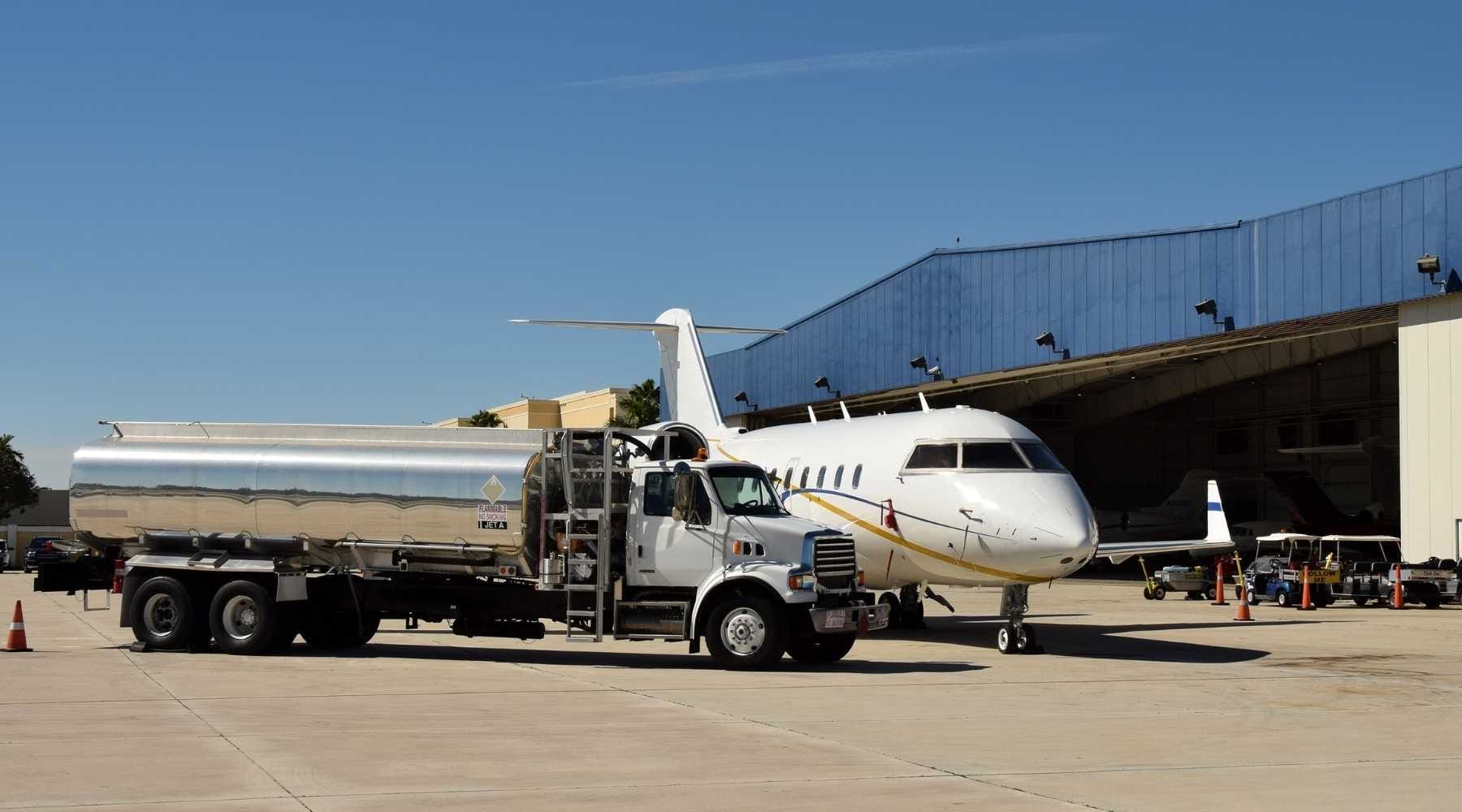
What operators should confirm before departure
Jet A-1 is the standard turbine fuel across Africa. Getting it into the aircraft on time is the part that varies. These are the items that cause delays when they are assumed rather than checked.
Availability at the stop
Jet A-1 is widely carried, but not every field holds stock at every moment. Larger uplifts at smaller airports need more notice. We confirm the position for your dates before you commit to the routing.
Quantity and density
The flight plan gives fuel in kilograms. The fueller usually delivers in litres. Density changes with temperature and with the batch, so the conversion is not fixed. We check the density on the ticket against the uplift so the mass you planned is the mass you get.
Uplift window
Bowsers are shared across the ramp and priority usually goes to scheduled traffic. We book your uplift against the slot and parking position so the fuelling fits inside the turnaround rather than extending it.
Payment method
What one supplier accepts, another may not. Confirm the method before arrival. A crew discovering a payment problem at the aircraft is an avoidable delay.
Documentation
Fuel tickets, release notes and quality paperwork are easier to collect at the ramp than to chase afterwards. Our team collects them at the uplift and sends them on.
Jet A-1 at a glance
This grade is a kerosene based turbine fuel. It is the standard civil aviation fuel in Africa, Europe, Asia and most of the world outside North America.
- Freeze point. Maximum minus 47 degrees Celsius. Lower than Jet A, which suits long sectors at altitude.
- Flash point. Minimum 38 degrees Celsius.
- Typical density. Around 0.80 kilograms per litre at 15 degrees Celsius, varying with temperature and batch. Always use the density on the delivery ticket, not an assumed figure.
- Used by. Gas turbine engines in airliners, business jets, turboprops and most rotary wing types.
- Not for. Piston engines, which need Avgas.
Where lower carbon options are required, see sustainable aviation fuel. Availability across Africa is limited and site specific, and we will say so plainly rather than promise a stop we cannot deliver.
Jet A-1 at Kenyan airports
Kenya is our base. We coordinate uplifts at the country’s main gateways and at the regional fields operators use.
- Jomo Kenyatta International Airport, Nairobi (NBO / HKJK). Kenya’s main international gateway and the busiest option for long haul and cargo. Operator guide to JKIA.
- Wilson Airport, Nairobi (WIL / HKNW). General aviation, charter, medevac and safari traffic. Operator guide to Wilson.
- Moi International Airport, Mombasa (MBA / HKMO). Coastal gateway and a frequent technical stop. Operator guide to Mombasa.
- Eldoret International Airport (EDL / HKEL). Cargo, charter and regional operations. Operator guide to Eldoret.
Outside Kenya we arrange fuel across the continent through our supplier and handler network. Send the full routing and we will confirm each stop, including any where the uplift is not practical.
Common questions
What is Jet A-1 fuel?
Jet A-1 is a kerosene based fuel for gas turbine engines. It has a maximum freeze point of minus 47 degrees Celsius and a minimum flash point of 38 degrees Celsius. It is the standard civil aviation fuel across Africa.
What is the difference between Jet A and Jet A-1?
The freeze point. Jet A freezes at a higher temperature, around minus 40 degrees Celsius, and is used mainly in North America. Jet A-1 is the international grade and is what you will normally uplift in Africa.
How much does Jet A-1 weigh per litre?
Around 0.80 kilograms per litre at 15 degrees Celsius. It is not a fixed number. Density falls as temperature rises and varies between batches. Use the figure printed on the delivery ticket for your mass calculation.
Is Jet A-1 available at JKIA?
Jet A-1 can be coordinated at Jomo Kenyatta International Airport. Availability, supplier coverage and uplift timing still vary, so confirm before departure rather than on arrival.
How far in advance should a Jet A-1 uplift be booked?
As soon as the route is known. Small uplifts at major gateways can often be arranged quickly. Large uplifts, unusual timings and smaller airfields need more notice.
Can AAES supervise the uplift?
Yes. Our team attends the uplift, checks the delivery against the request, verifies the density and quantity, and collects the paperwork.
Can Jet A-1 be booked with permits and ground handling?
Yes. Most operators send one request covering permits, fuel and ground handling together.
Need 24/7 flight support in Kenya or across Africa?
AAES supports permits, flight planning, dispatch, Jet A-1 fuel coordination, ground handling, cargo support and concierge services.
Email: sales@aaes.aero
Phone: +254 725 284 509
Jet A-1 fuel: common questions
Is Jet A-1 available in Kenya?
Jet A-1 is the standard jet fuel at Kenyan airports. Availability and supplier coverage vary by airport and by date, so confirm with the desk before departure.
What should operators confirm before a Jet A-1 uplift?
Availability at the airport, supplier coverage, pricing, fuel release paperwork, quality documents, and whether tankering makes sense for the route.
Does Jet A-1 density change?
Yes. Jet A-1 density varies with temperature, so uplift figures should be checked against the density recorded on the day rather than a fixed value.
Does AAES supervise Jet A-1 uplifts?
Yes. The desk confirms the supplier, aligns uplift timing with the turnaround and supervises the uplift on the ramp.
Which Kenyan airports does AAES cover for Jet A-1?
Jomo Kenyatta International and Wilson in Nairobi, Moi International in Mombasa, Eldoret International, and other Kenyan airports on request.
How do I arrange a Jet A-1 uplift?
Email sales@aaes.aero or call +254 725 284 509.
Jet A-1 Fuel Coordination in Kenya: Operator Checklist
Fuel is rarely an afterthought in flight operations. But in Kenya, fuel coordination can become one of the biggest factors affecting turnaround time, routing decisions and departure readiness.
Jet A-1 can be coordinated at Kenya’s major aviation gateways, but availability, supplier coverage, pricing, payment methods, uplift timing, and documentation requirements can vary by airport and operator arrangements.
At secondary airports, safari airstrips and remote destinations, fuel should never be assumed. Some locations may have fuel available subject to supplier confirmation, while others may require advance coordination, fuel delivery planning or tankering from Nairobi or another suitable fuel stop.
This guide covers what operators should confirm before every Jet A-1 uplift operation in Kenya.
Airports Where Jet A-1 Can Commonly Be Coordinated in Kenya
Jet A-1 fuel coordination is most commonly associated with Kenya’s major airports and aviation hubs, including:
- Jomo Kenyatta International Airport (HKJK / NBO) — Nairobi’s main international gateway
- Wilson Airport (HKNW / WIL) — Nairobi’s key general aviation, charter, safari and domestic aviation hub
- Moi International Airport (HKMO / MBA) — Mombasa’s main international airport
- Kisumu International Airport (HKKI / KIS) — western Kenya gateway
- Eldoret International Airport (HKEL / EDL) — regional passenger and cargo airport
Supplier coverage, uplift timing and payment arrangements should be confirmed for each movement.
For safari airstrips and remote destinations such as Masai Mara, Amboseli, Lewa, Nanyuki, Samburu, Lamu/Manda and other regional strips, availability can vary significantly. Some locations may support fuel coordination subject to availability, while others may require tankering or advance delivery arrangements.
Always confirm fuel availability before filing the final route. Do not assume based on a previous trip.
1. Confirm Fuel Availability in Advance
Never assume Jet A-1 will be available on arrival, especially outside Kenya’s main airports.
Before departure, confirm:
- Is Jet A-1 available at the destination airport or airstrip on the planned date and time?
- Is the fuel supplied from an airport fuel farm, a bowser, drum stock, or a trucked-in delivery?
- What notice period is required for uplift confirmation?
- Are there minimum uplift quantities?
- Is fuel available 24/7 or only during the supplier’s published hours?
- Is a prior fuel request required through the handler or supplier?
- Is the required fuel quantity practical for the location?
At major airports, same-day coordination may be possible depending on the supplier, credit status and operational workload. For remote or safari destinations, fuel should be planned in advance and confirmed in writing.
2. Confirm Fuel Supplier, Grade and Documentation
Fuel quality is a critical operational consideration. Operators should confirm the fuel grade, supplier and documentation process before uplift.
Before uplift, confirm:
- Fuel grade is Jet A-1
- Supplier name and into-plane provider
- Fuel meets recognised Jet A-1 specifications, such as DEF STAN 91-91 or ASTM D1655
- Fuel release or delivery note process
- Whether a certificate of quality or relevant fuel documentation is available
- Whether the uplift will be by hydrant, bowser, drums or other delivery method
- Whether any special operator fuel quality procedures must be followed
- Who will supervise or authorise the uplift
For remote operations, crews and operators should follow internal SOPs and supplier procedures carefully. If there is any uncertainty around quality, uplift process or source, consider tankering from a confirmed major airport where operationally practical.
3. Confirm Pricing and Payment Method
Fuel pricing in Kenya may vary by supplier, airport, uplift volume, payment method and credit arrangement.
Before uplift, confirm:
- Current price per litre, US gallon or kilogram
- Currency used for invoicing
- Whether the price includes taxes, into-plane charges or handling-related fees
- Accepted payment methods
- Whether card payment is available
- Whether cash payment is accepted and in which currency
- Whether a fuel release, fuel card or credit account is required
- Whether a pro forma invoice or a prepayment is needed
- Fuel receipt or delivery note format required for operator records
Do not assume that payment methods accepted at JKIA or Wilson will be accepted at smaller stations.
4. Arrange a Fuel Release if Needed
If the flight operates under a fuel card, broker account or credit arrangement, a fuel release may need to be arranged before arrival.
Before departure, confirm:
- Does the fuel provider cover the destination station?
- Has the fuel release been issued?
- Has the release been sent to the correct local supplier or into-plane agent?
- Does the handler have the release reference?
- Is the uplift quantity shown correctly?
- Is the aircraft registration correct?
- Is there an after-hours contact if the release is not accepted?
Missing, incorrect or delayed releases can create avoidable ground delays. Issue and verify the release before the aircraft departs.
5. Coordinate Fuel With the Handling Agent
The handling agent is often the operational link between the crew, supplier and airport stakeholders.
A well-briefed handler helps prevent timing issues, documentation gaps and unnecessary ramp delays.
Before departure, brief the handler on:
- Required uplift quantity
- Fuel unit: litres, US gallons or kilograms
- Preferred uplift timing
- Aircraft registration and parking stand
- Fuel supplier or release details
- Person authorised to approve the uplift
- Delivery note requirements
- Any special fuel additives or operator requirements
- Crew contact details
- Backup contact if the supplier is delayed
Avoid vague instructions such as “full tanks.” Give the handler a clear uplift quantity and timing requirement.
6. Confirm Additive Requirements
Some aircraft or operating conditions may require specific additives, depending on the aircraft type, the operator’s SOPs, and the approved fuel policy.
Before uplift, confirm:
- Whether FSII is required
- Whether anti-static additive requirements apply
- Whether the supplier can provide the required additive
- Whether the use of additives is approved for the aircraft and operator
- Whether additive documentation is needed
- Whether the crew must verify additive blending before uplift
Do not assume additives are available at every station. Confirm this before departure if required for the mission.
7. Plan for Tankering on Remote Sectors
For remote airstrips, safari destinations and smaller airports, tankering may be the safer operational decision.
Tankering may be useful when:
- Fuel availability is uncertain
- Fuel delivery lead time is too long
- Supplier coverage is unclear
- The payment method is not confirmed
- Quality documentation is unavailable
- Uplift timing may affect departure
- The next sector has a tight schedule
- The aircraft can carry the fuel without an unacceptable payload impact
Common Kenya routings that may require closer fuel planning include safari and remote-sector operations to Masai Mara, Amboseli, Samburu, Lewa, Nanyuki, Lamu/Manda and northern Kenya destinations.
When tankering, confirm the impact on aircraft weight, payload, runway performance, temperature conditions and alternate planning.
8. Watch for Timing Issues
Fuel may be technically available, but operationally difficult if timing is not aligned.
Common timing issues include:
- Fuel supplier not available after hours
- Bowser was delayed by other traffic
- Handler not briefed on uplift timing
- Fuel release not received locally
- Payment approval pending
- Crew duty time pressure
- Customs or passenger processing delays departure
- Remote delivery arriving later than planned
Fuel should be coordinated as part of the full turnaround plan, not separately.
9. Final Pre-Departure Fuel Check
Before releasing the flight:
- Fuel availability confirmed at the destination
- Supplier confirmed
- Uplift quantity confirmed
- Fuel grade confirmed as Jet A-1
- Fuel release issued, if required
- Payment method confirmed
- Handler briefed
- Uplift timing agreed
- Quality or delivery documentation process confirmed
- Additive requirements confirmed, if applicable
- Supplier contact number available to crew and handler
- Tankering plan is reviewed if the destination supply is uncertain
- Alternate fuel stop identified if needed
Common Fuel Coordination Mistakes in Kenya
Assuming fuel is available because the airport is operational.
An airport may be open, but fuel supply, bowser availability or payment arrangements may still need confirmation.
Waiting too long for remote destinations.
Some locations require earlier coordination, especially if fuel needs to be delivered or arranged through a specific supplier.
Using previous trip information without rechecking.
Supplier coverage, pricing, operating hours and credit arrangements can change. Always confirm fresh for each movement.
Not aligning fuel with handling.
Fuel timing must align with parking, crew duty time, passenger movement, customs, ground handling, and the departure schedule.
Providing unclear uplift instructions.
Avoid “top off” or “full tanks” unless that is accepted under your SOP. Use clear quantity, unit and timing instructions.
Not confirming the fuel release locally.
A release issued by the provider is only useful if the local supplier and handler have received and accepted it.
Why Fuel Coordination Matters in Kenya
Kenya has strong aviation demand across scheduled airline operations, private aviation, safari travel, cargo, humanitarian flights and regional connections.
That demand creates a busy operating environment, especially around Nairobi and major tourism routes.
Fuel coordination helps operators manage:
- Turnaround timing
- Payment certainty
- Fuel availability
- Documentation flow
- Remote-sector planning
- Supplier communication
- Tankering decisions
- Departure readiness
A strong fuel plan reduces the risk of last-minute delays and gives crews better operational control before the aircraft is released.
Need Jet A-1 Fuel Coordination in Kenya?
AAES supports Jet A-1 fuel coordination in Kenya and across Africa, as well as permits, flight planning, dispatch, ground handling, cargo support, and concierge services.
From Nairobi and Mombasa to regional and safari operations, AAES helps operators confirm the details that keep movements compliant, coordinated and on schedule.
Perfect Journey Every Time.
Email: sales@aaes.aero
Phone: +254 725 284 509
AAES fuel services
Jet A vs Jet A-1: Which Fuel Is Used in Africa?
Jet A and Jet A-1 are kerosene-based aviation turbine fuels, but they are not identical. Jet A is used mainly in the United States and has a higher freezing point of approximately −40°C. Jet A-1 has a lower freezing point of approximately −47°C and is the standard aviation turbine fuel used across most international markets, including Kenya and much of Africa.
Operators should never assume that Jet A will be available at an African airport. Confirm the required fuel grade, airport, uplift quantity, aircraft registration and operating schedule before departure. AAES checks local supplier coverage and confirms the available specification before issuing the uplift arrangement.
Can an aircraft use Jet A instead of Jet A-1?
Compatibility depends on the aircraft type, approved operating documentation and planned conditions. The operator and flight crew must confirm that the requested grade is approved for the aircraft. AAES coordinates the grade specified by the operator and confirms regional availability with the supplier.